
Mesylab
Bibli: a small app for a school library
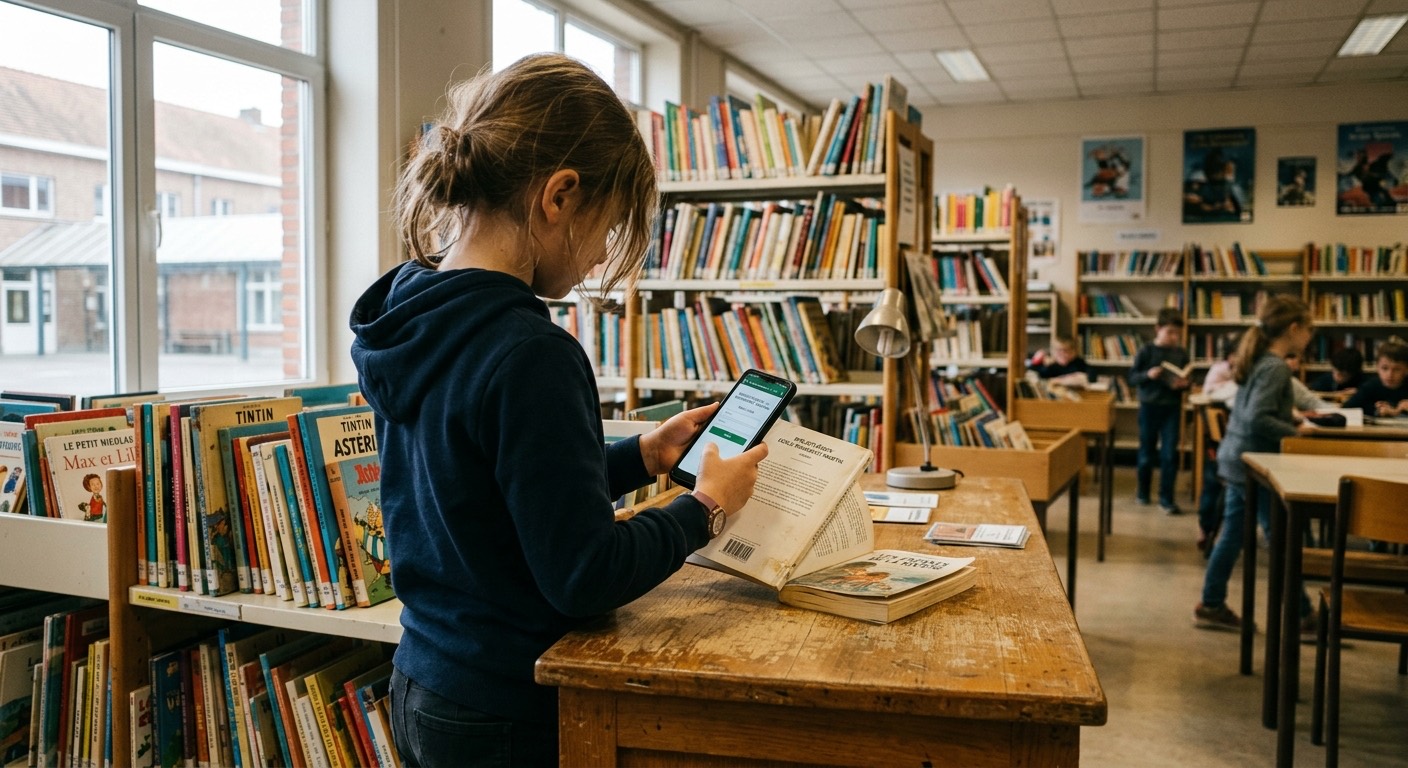
Bibli is a small application written for the library of the school of Lincé, in French-speaking Belgium: about two thousand books, two hundred pupils, a few dozen loans a week. It is run by teachers and volunteers, and there is no IT staff on site.
That last sentence decided the technical choices for this project. I tried to stick to one question: what breaks in five years if nobody touches it? A Go binary, a SQLite file, the standard library, HTMX for the interactive bits — all of it committed to the repository, no CDN, one production dependency. Nothing original, which is rather the point: backing up means copying a file.
At the desk
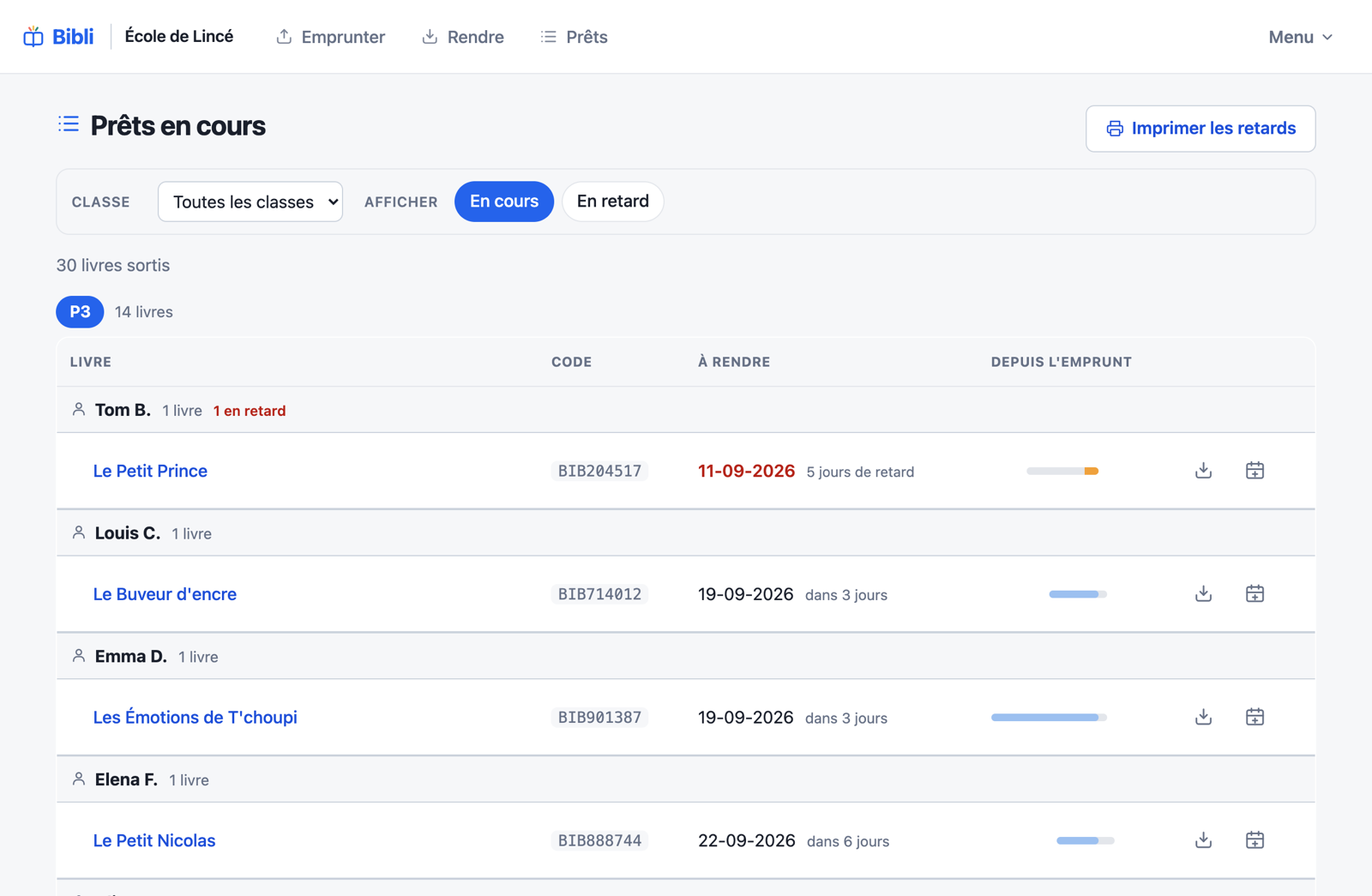
A loan is recorded with a €30 USB barcode scanner, which behaves like a keyboard, or with the camera of a phone or tablet. Scan the pupil’s card, then the books. The screen recalls what the child already has out, and flags any overdue book before another one is handed over. A return needs nothing but the book’s barcode.
The ISBN, and its second form
This is where I got it wrong first. The barcode on the back of a book is always an EAN-13, but books published before 2007 were catalogued under ISBN-10, and many records are indexed only in that form. Querying a catalogue with the scanned value alone leaves out part of the collection — the older part, which is most of a school library.
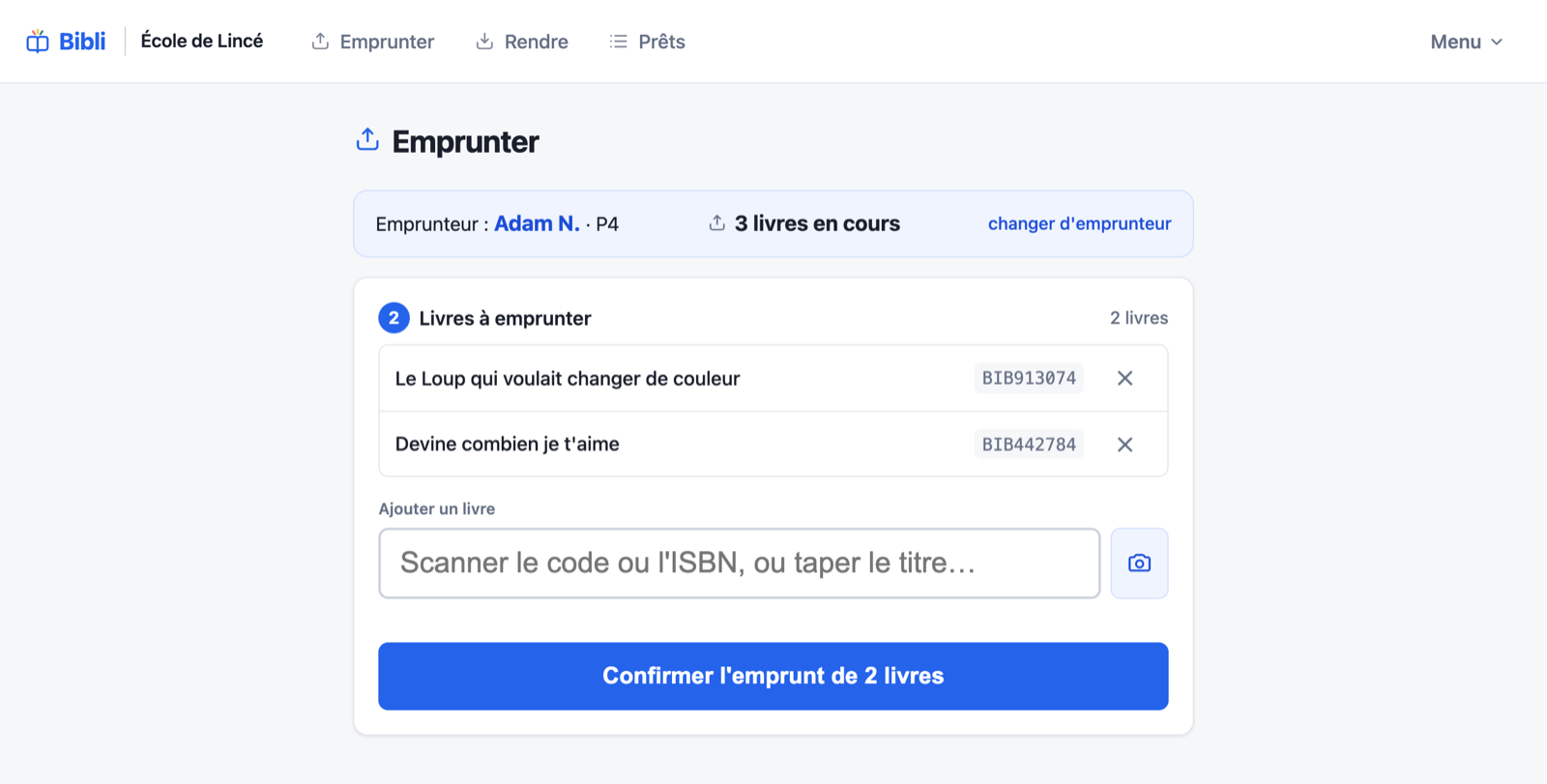
So Bibli works out both forms and queries with both: the BnF first, then UniCat for Belgian editions, Google Books and Open Library after that. The record comes back pre-filled, you correct it, you say how many copies.
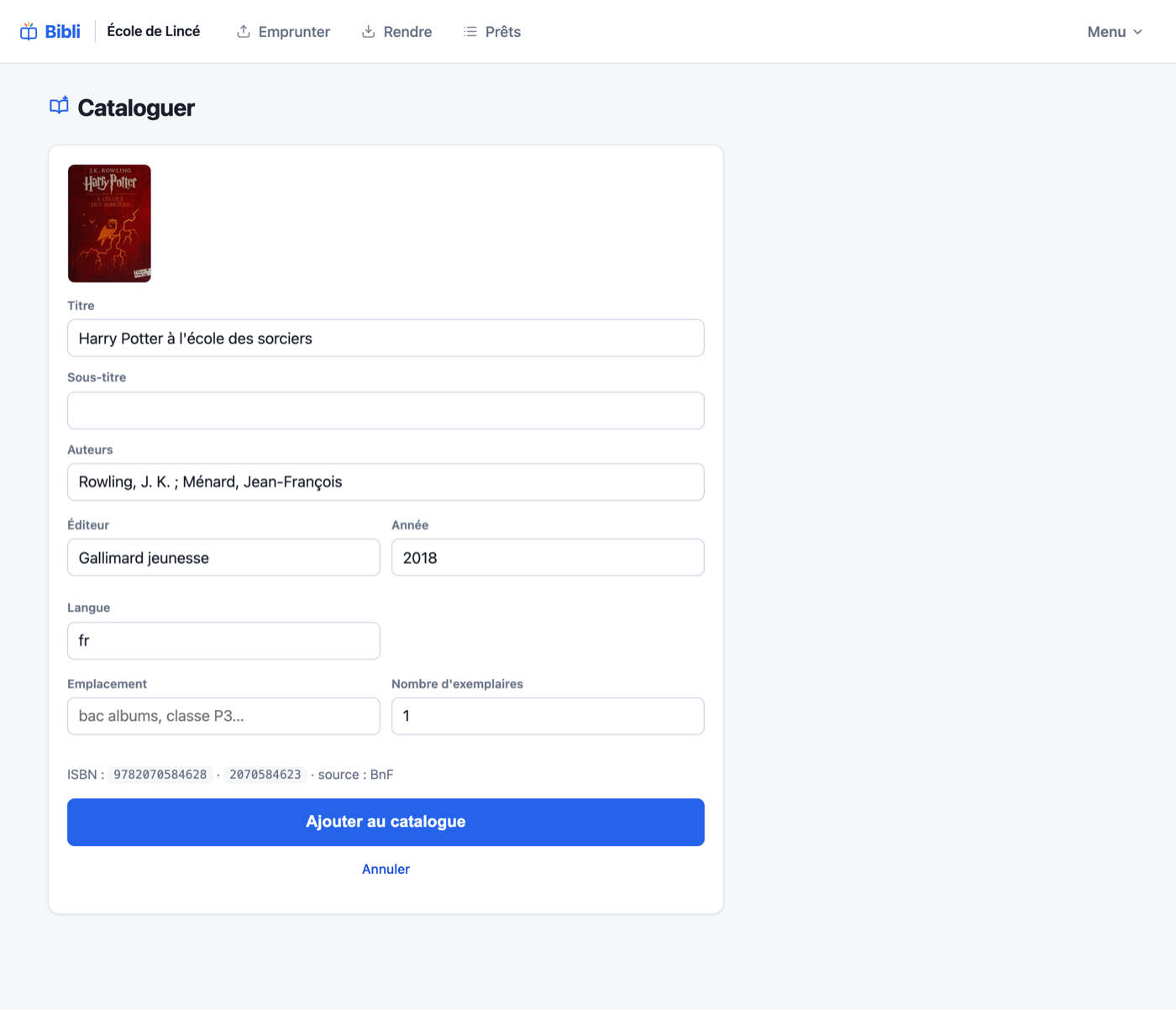
In my tests, three to seven per cent stay unresolved — picture books, small publishers, older titles. So manual entry is one click away, and it is not a fallback: it is a normal path.
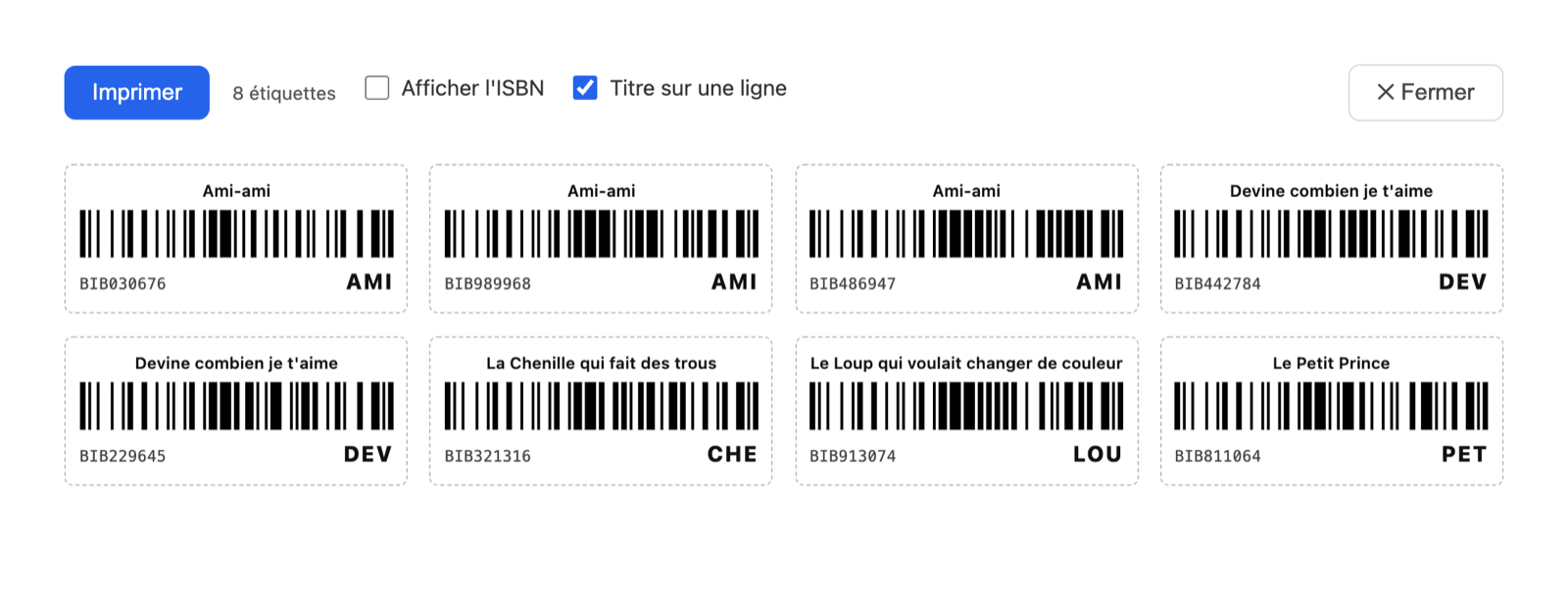
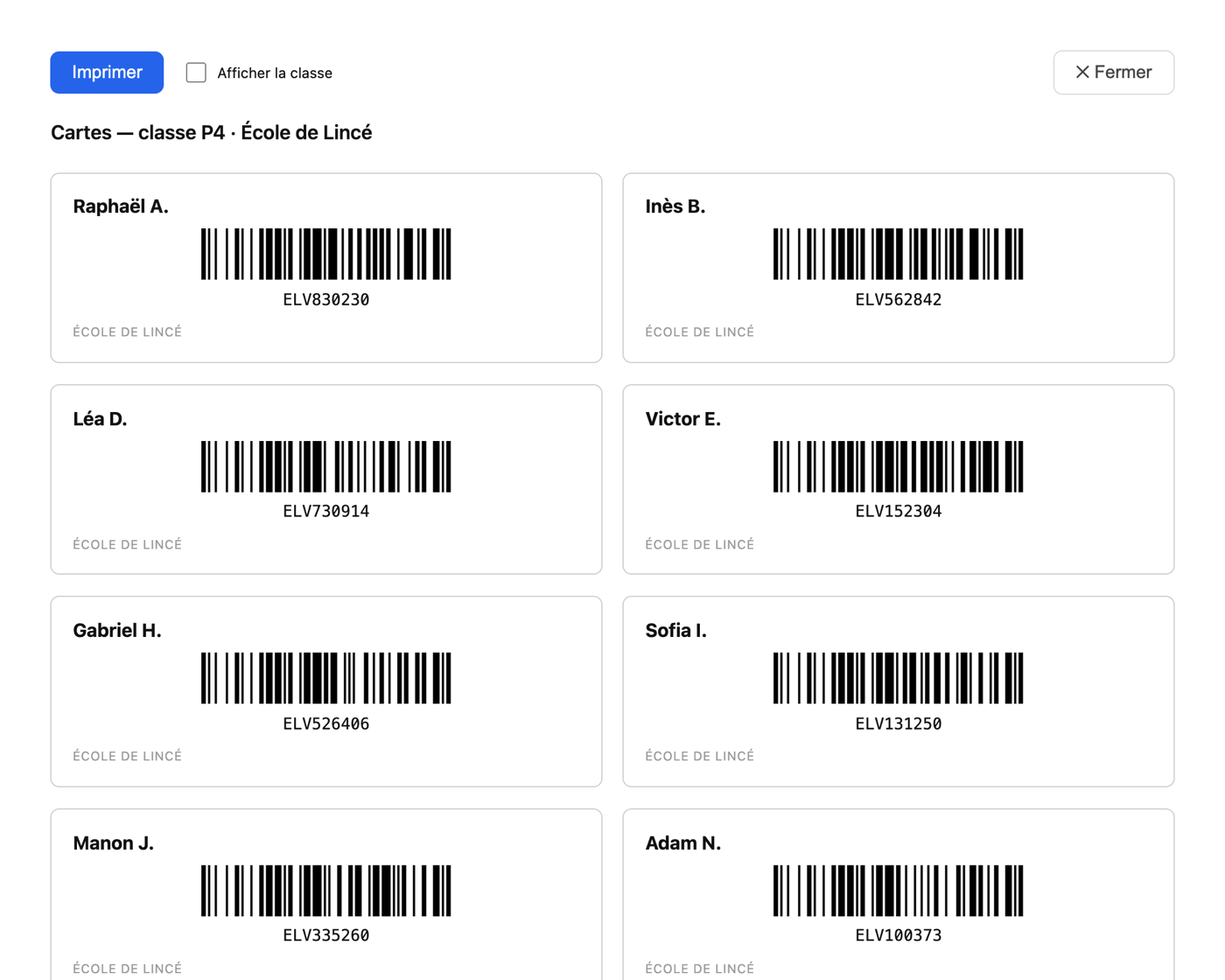
Labels print four to the width of an A4 sheet, with the shelf mark taken from the title. Borrower cards print by class.
As little data as possible
This is data about children, so the app records a first name, a last-name initial and a class. Nothing else: no date of birth, no address, no email, no photo. “Durant” becomes “D.”. If the database ever leaks, it stays barely identifying.
Loan history says a lot about a child, though: past an adjustable delay — three years by default — returned loans are reassigned to an anonymous borrower. The link between the child and their reading disappears, the book keeps its count.
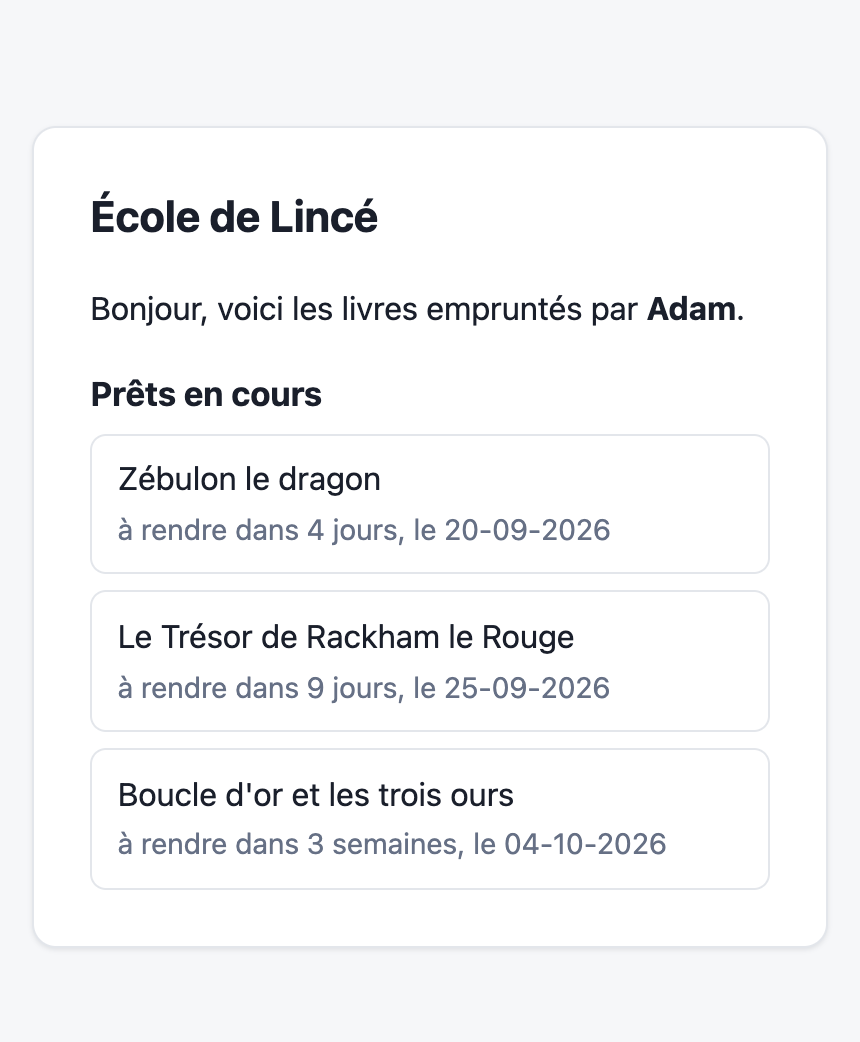
Parents have no accounts: a secret per-pupil link, handed out in person, shows what the child has out. Nothing is sent, no address is stored.
And only an ISBN ever leaves the school: covers are fetched by the server, never by a pupil’s browser.
What I did not build
No reservations, no public catalogue, no automatic emails to parents, no pupil accounts, no fines. Less out of principle than out of caution: every extra screen is a screen to explain to someone who did not ask for it, and to repair when I am no longer around.
The application has not really been used yet. The real questions — how long a loan should run, how many books at a time, what to do with a lost book — are waiting on a few weeks of actual use, and will probably be settled differently from what I assumed.
It is free software under the AGPL-3.0; the repository will be opened shortly.
If another school would like to try it, or if you have a remark on the way it is built, let me know. What interests me most is hearing what turns out to be missing once real pupils are in front of it.